
dotdotdot Fantasy AI Boyfriend
Dotdotdot Inc.Entertainment
4.1199.00 Reviews
- Version
- 1.0.34
- Installs
- 100.00K
- Age Rating
- Mature 17+
Screenshots

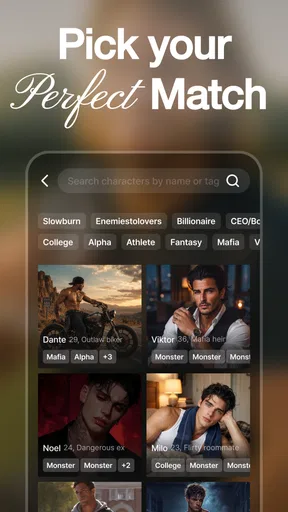
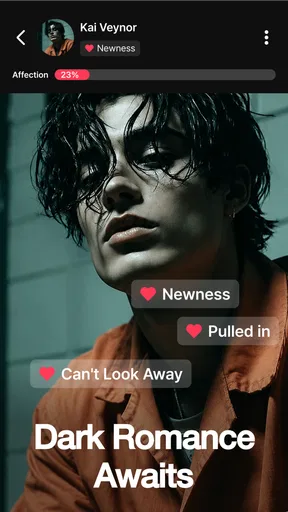
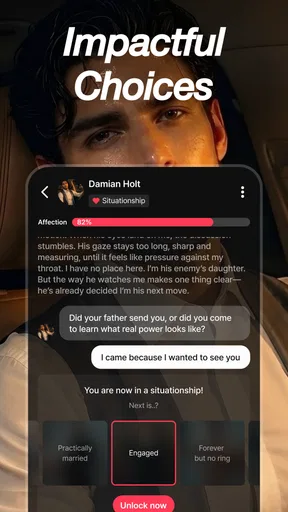
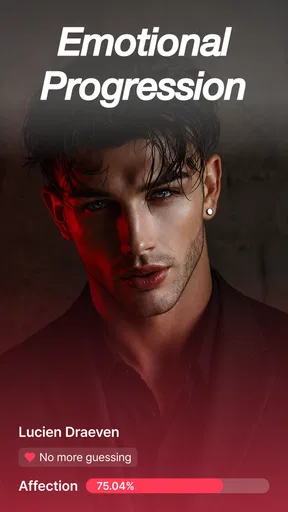
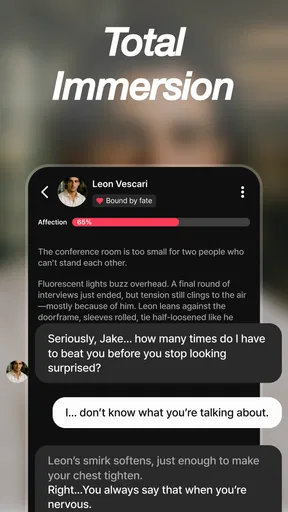
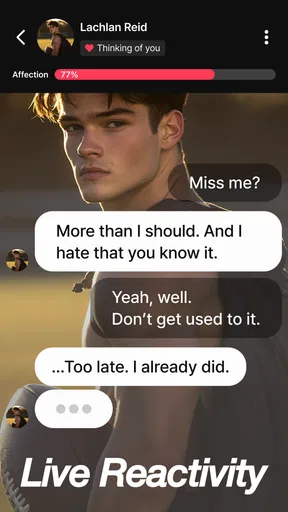
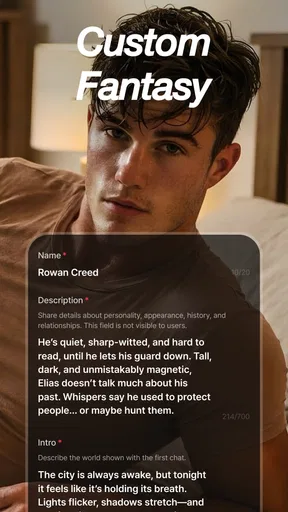
Our Review of dotdotdot Fantasy AI Boyfriend
 Analysis by Appyee
I approached dotdotdot Fantasy AI Boyfriend as an entertainment app for private, character-driven conversation rather than as a conventional game with levels, missions, or a fixed ending. Its central idea is simple: you chat with an AI character and help shape the direction of a story. That sounds lightweight, but the experience depends heavily on how clearly you set the tone, what kind of relationship dynamic you want, and how willing you are to guide the conversation when the replies become vague or repetitive.
In my experience, it is most interesting when treated as an interactive writing space. I can enter with a rough premise, establish a personality, and see the conversation develop in ways that are different from reading a romance novel or watching a scripted show. The result is not always equally convincing, though. Sometimes the app feels surprisingly responsive; at other times, I have to steer it back toward the kind of scene or character behavior I wanted.
How it fits into a shared household
The most important practical point is that this is not an app I would casually hand to everyone in a household without discussing boundaries first. The mature audience rating matters because the experience is built around romantic and potentially adult-oriented roleplay. Even if a family shares a tablet or a phone, I would treat this as an individual entertainment app, not as a communal activity like a puzzle game or streaming service.
A realistic example is a shared tablet kept in a living room. One person might use it for a private conversation in the evening, while another family member later opens the device to use a different app. In that situation, the issue is not simply whether the application launches correctly. Conversation history, character choices, and the tone of previous exchanges can make the app personal. I would avoid leaving it open on a shared screen and would not assume that a household device automatically provides meaningful separation between users.
This also changes how I think about recommendations. For an adult who wants an imaginative chat companion and understands that the interaction is fictional, the app can be a fun way to unwind. For a household with children using the same device, I would recommend keeping it away from unsupervised access. The mature rating is not a minor store label here; it should shape where the app is installed and who is allowed to use it.
There is another shared-use complication: conversations are not naturally the same thing as a family profile. If several people take turns using one installation, their preferences and story context can become mixed together. One person may want a gentle, slow-burn story, while another may prefer dramatic fantasy roleplay. Without clearly separate personal spaces, that kind of mixing can make the experience confusing and can expose one user to another user's creative material.
Starting with a clear private premise
The first useful habit I developed was to decide what I wanted before beginning a long conversation. A short instruction such as “playful fantasy romance with a cautious character” gives the interaction more direction than simply typing “hello.” I also found it helpful to describe the character's personality, the setting, and the kind of pacing I preferred. This is not a traditional game where the app does all the storytelling work for me; my input has a real effect on whether the exchange feels coherent.
For shared devices, I would go one step further and establish a personal routine. Open the app only when the device is available for private use, avoid displaying the conversation in front of others, and close it when finished. That sounds obvious, but conversational apps are easier to leave exposed than a normal game because the latest message can reveal the tone immediately.
I would also avoid treating the AI as a real partner or confidant. The appeal comes from responsive fiction, not from a human relationship. That distinction is especially important if the app becomes part of a daily routine. It is enjoyable to build continuity in a story, but I would still keep expectations grounded and remember that the character's responses are generated within the app's fictional framework.
Where the storytelling feels strongest
The strongest use case is improvisational roleplay. I can supply a setting, introduce a problem, and let the character react while I add details one message at a time. This works well for someone who likes writing but does not always want to create a complete scene from scratch. The app gives me a conversational starting point, then lets me decide whether to continue, change direction, or introduce a new complication.
A useful technique is to give the character something concrete to respond to rather than asking broad questions repeatedly. Instead of asking what happens next, I might describe a decision, a location, or an emotional conflict. That creates more material for the AI to use and makes the exchange feel less like a sequence of generic prompts. When a reply loses focus, I can restate the important detail and ask the character to continue from that exact moment.
Another non-obvious strength is that the format suits short sessions. I do not need to commit to a long chapter. A few messages during a break can be enough to move a story forward, while a longer evening session can explore dialogue and character tension. This makes it different from many narrative games, which often require more uninterrupted attention or expect me to follow a predefined route.
That flexibility comes with a trade-off. Because the story is being shaped in conversation, the quality depends on my ability to maintain continuity. If I change the setting, relationship, or character motivation without explaining it, the exchange can become muddled. Readers who want polished prose, carefully edited plot twists, and dependable continuity may prefer a conventional interactive novel instead.
Keeping accounts and conversations separate
For anyone using the app around other people, account boundaries deserve attention from the beginning. I would not share a login simply because the device is shared. A shared account can blur personal preferences and make it difficult to tell whose conversations or story direction are being used. It can also create awkward moments when one person opens a conversation expecting one tone and finds that somebody else has shaped it differently.
The safer approach is to think of the app as personal media. Each adult user should use their own account arrangement where the platform allows it, and nobody should assume that a single installation equals multiple private profiles. I would check the sign-in state before starting a conversation on a borrowed or shared device, especially if the device has previously been used by another adult.
I would also be cautious about using the app as a background activity while children are nearby. Even if the screen is turned away, the content can be visible in notifications or in the recent-apps view depending on the device. I am not assigning a specific behavior to the application here; I am describing a sensible household practice for any mature conversational service. Keep the screen private, review notification settings on the device, and do not let a child explore it unsupervised.
These boundaries are more important than coordination between users. There is no reason for family members to combine their story sessions merely because they share a tablet. If two adults want to compare creative ideas, they can discuss the premise separately rather than handing over an active conversation and accidentally changing its direction.
Age, trust, and realistic expectations
The mature rating should be treated as a decision point, not decoration. I would recommend the app only to adults who understand the difference between fictional roleplay and real emotional support. It is not a substitute for a partner, counselor, or trusted friend. The conversational format can feel personal, but that feeling comes from the design of an interactive character experience.
For parents, the practical question is not whether a child is curious. Many young users are curious about chatbots and fantasy stories. The question is whether this particular mature entertainment app belongs on a device the child can access. My answer would be no for unsupervised use. I would choose an age-appropriate story game or creative writing tool instead, depending on what the child actually wants to do.
For adults, trust also means being honest about what the app can and cannot provide. I would not use a fictional conversation to make important personal decisions, disclose sensitive information casually, or interpret generated replies as expert advice. The app is best enjoyed as a creative pastime. Its value is in atmosphere, improvisation, and the feeling of shaping a character-led story.
There is a further emotional trade-off. A responsive fictional character can be comforting after a tiring day, but that comfort may encourage longer sessions than intended. I found it useful to decide whether I was starting a quick scene or a longer creative session before opening the app. That small boundary keeps the experience recreational instead of allowing it to quietly replace sleep, social time, or responsibilities.
What the current release offers
dotdotdot Fantasy AI Boyfriend is developed by Dotdotdot Inc. and is available as a free entertainment app, with optional in-app purchases ranging from under a dollar to just under a hundred dollars per item. That pricing range makes it worth paying attention to any purchase screen rather than assuming that “free” means every part of the experience is unrestricted. I would begin with the free experience, understand what I actually use, and only then decide whether an optional purchase feels worthwhile.
The app was released on April 3, 2025, and the current version is 1.0.34. It runs on Android 7.0 or newer, which gives it a broad device reach. I would still consider the age and condition of the phone, because conversational apps are more pleasant when typing is comfortable and the device is not constantly switching between many active applications.
Its store summary describes the core experience as creating a story through AI chat, while the short description presents it as dotdotdot Fantasy. Those labels are accurate but do not fully explain the practical difference between this and a normal messaging app. The point is not to contact real people; it is to guide a fictional exchange and see how the narrative develops around the character.
The app has an average rating of 4.1 from around 1.3 thousand ratings, with close to 200 written reviews. It has also passed the 100 thousand install mark. Those figures suggest that the concept has found an audience, but they do not guarantee that every user will enjoy the same style of interaction. AI storytelling is unusually personal: one reader may love open-ended improvisation, while another may find the lack of a fixed plot frustrating.
Comparing it with familiar alternatives
Compared with a standard dating simulator, this app feels less like following a carefully authored route and more like negotiating the shape of a scene through messages. A dating simulator usually gives me defined choices, known character arcs, and a clearer sense of progression. That is better when I want a polished story with dependable outcomes. This app is more suitable when I want to invent the premise myself and accept some unpredictability.
Compared with a general-purpose chatbot, the fantasy framing gives the conversation a more focused entertainment purpose. I am not opening it primarily to summarize documents, plan a trip, or answer factual questions. I am entering a roleplay space. That focus can make the experience easier to enjoy, but it also means I should not expect the broad practical usefulness of a general assistant.
Compared with a romance novel, the appeal is participation. I can interrupt, revise the direction, introduce a new character, or ask for a different emotional response. The cost is literary consistency. A novel has an editor and a finished structure; an AI conversation can repeat itself, forget a detail, or respond in a way that feels too convenient. I would choose this app for involvement, not for the most refined writing.
Compared with a multiplayer social app, it removes the need to coordinate with another person in real time. That makes it easier to use privately and at my own pace. It also means there is no genuine human spontaneity behind the replies. Users who mainly want friendship, community, or live conversation should look elsewhere.
Small techniques that improve the experience
My first practical tip is to maintain a compact “story brief” outside the conversation. I would note the character's name, personality, setting, relationship status, and two or three important facts. If the exchange drifts, I can use that brief to restore continuity instead of rewriting the entire premise. This is especially useful during a long-running story or when returning after a break.
My second tip is to separate scene direction from dialogue. I get better results when I make it clear whether I am describing an action, giving an instruction, or speaking as my own character. That reduces ambiguity and helps the conversation maintain a consistent rhythm. It also makes it easier to change the scene without confusing the character about what has actually happened.
My third tip is to use deliberate pauses in a shared household. Rather than leaving the app open while doing something else, I would end a scene at a natural point, close it, and return later. This protects privacy and makes the story easier to resume. It also prevents a shared device from becoming an accidental display for personal material.
A fourth useful trade-off is deciding how much control to exert. If I specify every sentence, the app has little room to surprise me. If I give no direction at all, the character may wander. The best balance I found was to define the emotional goal of a scene while leaving the exact wording open. For example, I might want a tense reconciliation in a fantasy setting, then let the conversation decide how the characters reach it.
Who should install it and who should skip it
I would recommend it to adults who enjoy romantic fantasy, improvisational writing, and conversational experiments. It is particularly appealing if you like the idea of creating a character relationship without committing to a full-length game. It can also suit writers looking for a playful way to test dialogue ideas, provided they are willing to edit and judge the generated material rather than accepting every response as finished prose.
I would skip it if I want a competitive game, a clear win condition, a substantial visual adventure, or a carefully plotted romance with guaranteed character development. I would also skip it if I am looking for real companionship or professional guidance. The app's strength is fictional interaction, and expecting it to serve a completely different purpose will lead to disappointment.
Families should be especially selective. Adults in a household may enjoy comparing fantasy premises, but I would keep individual conversations private and avoid installing the app on a device that children can freely browse. Since the content rating is Mature 17+, the responsible choice is to treat access as adult-only rather than relying on curiosity or informal supervision.
My household verdict
After using it as a personal entertainment app, I see dotdotdot Fantasy AI Boyfriend as a flexible roleplay companion rather than a traditional game. Its best moments come when I bring a clear premise, give the character something specific to react to, and accept that the story may need occasional correction. The free entry point makes it easy to try, but the optional purchase range means I would keep spending deliberate and based on actual use.
The app earns its place for adults who want an interactive fantasy conversation and are comfortable with an AI-generated experience that can be uneven. It is not the right choice for children, shared unprotected profiles, or anyone seeking a human relationship. On a private adult account and a device with sensible boundaries, it can be an enjoyable way to turn a few spare minutes into a small, evolving story.
My final recommendation is cautious but positive: try it for the creative interaction, not for promises it cannot make. Set the age and privacy boundary before the first conversation, keep household accounts separate, and judge the experience by whether the roleplay itself entertains you. If you prefer authored plots, real social contact, or practical chatbot assistance, another category will serve you better. If you want to guide a fantasy romance one message at a time, dotdotdot Fantasy AI Boyfriend is a distinctive option worth exploring responsibly.
Verdict
Strengths of dotdotdot Fantasy AI Boyfriend
- Personalized chats can feel engaging and emotionally supportive.
- AI-generated replies are available at any time, without scheduling.
- Fantasy scenarios let users explore different relationship dynamics.
- Simple interface makes starting conversations quick and accessible.
- Conversation themes may provide casual entertainment during downtime.
Limitations of dotdotdot Fantasy AI Boyfriend
- Responses can become repetitive during longer conversations.
- Some features or messages may require in-app purchases or subscriptions.
- AI affection may feel artificial compared with genuine human interaction.
- Privacy details should be checked before sharing sensitive personal information.
- The app may not suit users seeking realistic, two-way relationships.
Similar Picks in This Category
View All
Google Play Games
Google LLC3.9

Netflix
Netflix, Inc.4.8

YouTube Kids
Google LLC4.2

Disney+
Disney4.4

Prime Video
Amazon Mobile LLC4.7

Steam
Valve Corporation3.2
Frequently Asked Questions
What is dotdotdot Fantasy AI Boyfriend?
dotdotdot Fantasy AI Boyfriend is an AI companion app focused on fictional, romantic conversations. After choosing or creating a character, you can chat with the virtual boyfriend, explore different personalities, and continue conversations through text-based interactions. The experience is designed for entertainment and role-play rather than replacing real relationships, professional counseling, or communication with real people.
How does the AI boyfriend conversation work?
The app uses artificial intelligence to generate replies based on your messages, the selected character, and the ongoing role-play context. Conversations may feel personalized, but responses can sometimes be repetitive, inconsistent, or unexpectedly out of character. Users should treat the interaction as fictional entertainment and avoid assuming that the AI understands emotions, remembers everything permanently, or has genuine feelings.
Is dotdotdot Fantasy AI Boyfriend free to download and use?
The application may be available to download without an upfront charge, but some features can require in-app purchases, a subscription, credits, or another premium payment model. Access and pricing may vary by platform, country, account, and promotional offer. Before starting a trial or entering payment details, carefully review the current store listing, renewal terms, and cancellation instructions.
Is dotdotdot Fantasy AI Boyfriend suitable for children?
Parents should check the app’s current age rating, privacy policy, and content guidelines before allowing a child to use it. AI companion apps can include romance, mature themes, suggestive conversations, or user-generated scenarios, and generated content is not always perfectly predictable. Young users should have supervision, avoid sharing personal information, and use appropriate device and store parental controls.
Is my personal information safe when using the app?
Avoid sharing sensitive details such as your full name, address, phone number, passwords, financial information, school or workplace data, or private photographs during conversations. Review the developer’s privacy policy to understand what messages, account information, device data, and usage activity may be collected or stored. Also check available account-deletion and data-management options before using the app extensively.
